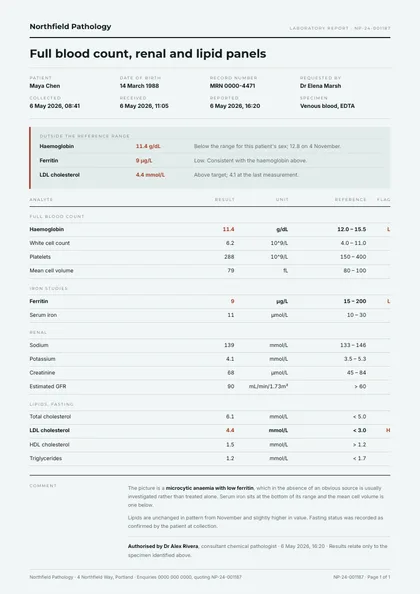
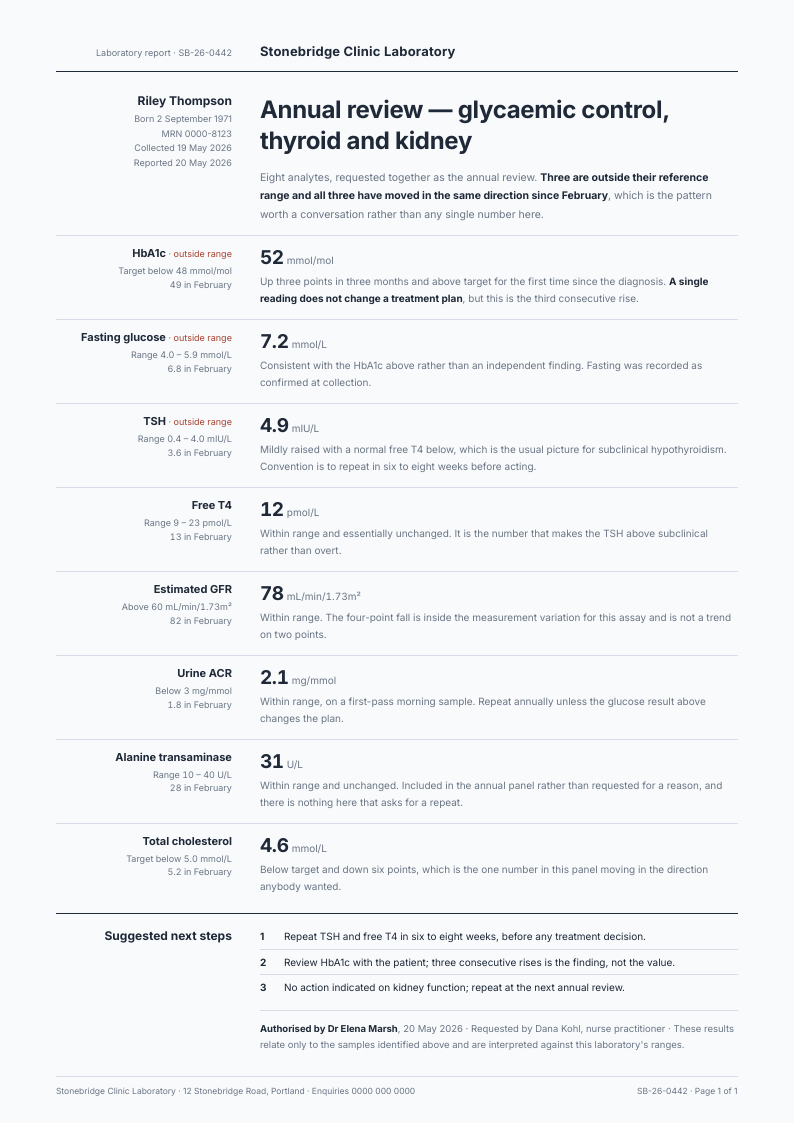
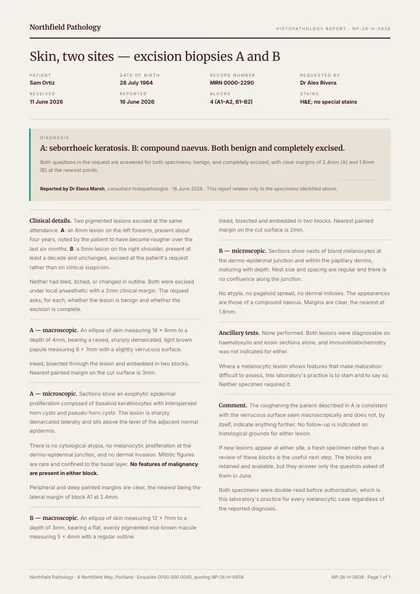
Rendered by the same engine the API runs — this is the compiled output, not a
mock-up.
What happens when your data replaces the sample
What Range Margin does when the data is longer, shorter or emptier than the sample:
Fixed page furnitureNever grows, never moves
the head rule under the masthead and the foot rule carrying the laboratory and the folio (fixed height — nothing in either may grow)
Repeats per recordOne block per row of your data
one analyte per row, its reference range and previous value hung in the margin; the closing actions
Grows with your dataAbsorbs long values without breaking
every analyte's interpretation; the standfirst; the closing note
Pinned to every pageHolds position across page breaks
the head and foot rules sit at the page top and bottom on every page; the margin holds its width
Order on the pageWhat sits after what
each analyte follows the previous one down the measure; the closing note follows the analytes
Page breaksWhat may split, what must not
the analyte list may split across pages; the authorisation block must not
Last pageHow the document ends
the closing note and the authorisation may occupy the final page alone; the margin and foot rule carry it
Palette and type
Slate & emerald
Ink #1f2937
Accent #10b981
Canvas #f8fafc
Inter only
The pairing this design was drawn around, laid out as a
Minimal, type-led
on A4 portrait. Either face can be swapped in the editor — the layout
holds on the grid, not on a font's metrics.
Range Margin is the minimal, type-led reading of this document; its siblings take it differently — swiss grid and editorial serif.
See all lab results templates.
We use Google Analytics cookies to see how people find and use pdfs.build. No ads, no
cross-site tracking. Privacy Policy